





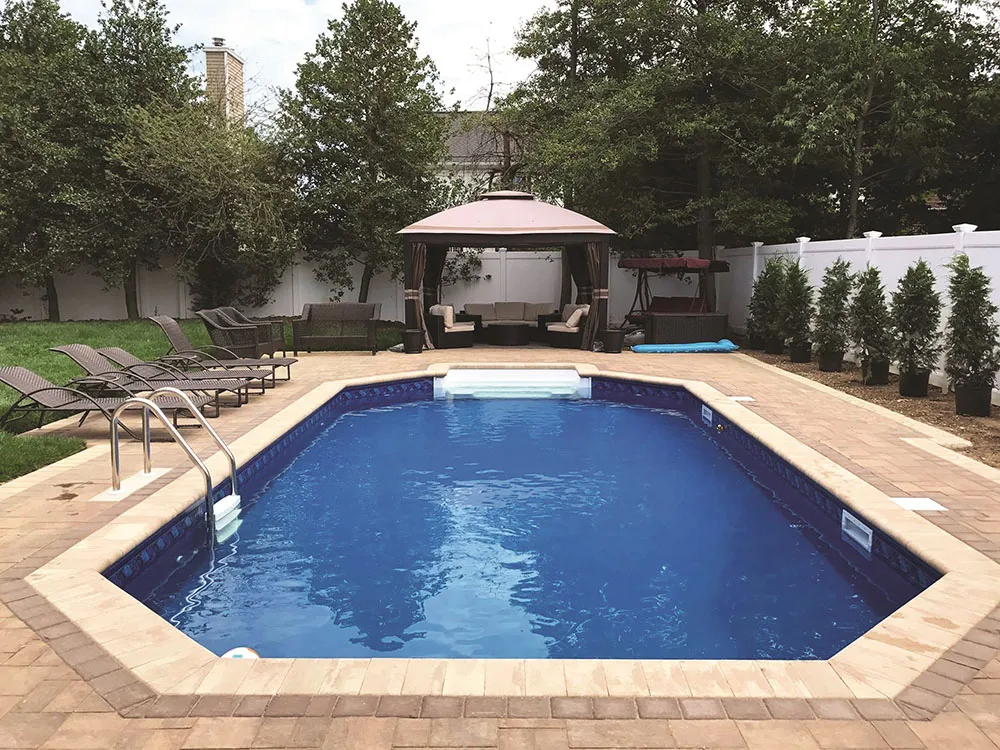
Picture your backyard on a warm July afternoon.
The kids are in the pool. Friends are gathered on the patio. Dinner’s on the grill. Instead of loading up the car for a crowded public pool, you’re already exactly where you want to be.
That’s what inspires most people to start looking at inground pools.
Then the questions start.
How much does an inground pool really cost? How long does installation take? Will a pool become a second full-time job to maintain?
If you’ve been searching for answers, you’ve probably noticed that every website seems to recommend something different.
This inground pool buying guide cuts through the noise. At Bachmanns, we’ve been helping homeowners throughout Madison, Brookfield, and surrounding Wisconsin communities build beautiful backyards for decades. We’ve seen what makes people thrilled with their investment years later and what leads to expensive regrets.
Our goal isn’t to convince you that one type of pool is better than another. It’s to help you understand your options so you can choose the pool that fits your home, your budget, and the way your family actually lives.
If you’re ready to shop inground pools, this guide is a great place to start.
Step 1: Set Your Budget (and Understand Total Cost)
The first question almost every homeowner asks is:
“How much does an inground pool cost?”
It’s a fair question.
It’s also only part of the picture.
The pool itself is just one piece of the project. By the time everything is finished, your investment may also include excavation, electrical work, fencing, decking, landscaping, permits, dirt hauling, retaining walls, and drainage improvements.
Those costs vary from property to property, which is why two similar-looking pools can end up with very different price tags.
As a general starting point:
- Vinyl liner pools: approximately $45,000–$90,000+
- Fiberglass pools: approximately $50,000–$100,000+
- Concrete (gunite/shotcrete) pools: approximately $75,000–$150,000+
The smartest approach isn’t to shop for the cheapest pool.
It’s to decide how much you’re comfortable investing in the entire backyard project. That makes it easier to prioritize the features you’ll enjoy every day instead of running into unexpected expenses halfway through construction.
Step 2: Choose the Right Type of Inground Pool
This is where most homeowners spend the most time researching.
Fiberglass.
Concrete.
Vinyl liner.
Every manufacturer claims their pool is the best. The truth is, each option has advantages and each comes with trade-offs.
Vinyl Liner Pools

Vinyl liner pools continue to be one of the most popular choices for families looking for a balance between affordability and customization.
Unlike fiberglass, vinyl pools can be built in a wider variety of shapes and sizes. The smooth liner is comfortable underfoot and offers plenty of design flexibility.
The liner itself, however, won’t last forever. But don’t worry Bachmann’s professional team offers pool liner replacement in Madison & Brookfield as well.
Depending on use and maintenance, most homeowners replace the liner every 8 to 15 years. Fortunately, replacing the liner is far less expensive than replacing the entire pool and gives you an opportunity to refresh its appearance.
Vinyl liner pools are a great option if you:
- Want to keep initial costs lower
- Like more design flexibility than fiberglass
- Prefer a soft, smooth swimming surface
Concrete Pools (Gunite or Shotcrete)
If your dream pool is completely custom, concrete deserves a close look.
Concrete pools are built entirely on-site, allowing almost unlimited flexibility in shape, size, depth, and features. Freeform pools, infinity edges, oversized tanning ledges, integrated spas, and elaborate water features are all possible.
That freedom comes with a higher investment.
Concrete pools usually take the longest to build and require more ongoing maintenance because the porous surface is more susceptible to algae growth. They also need resurfacing over time.
For homeowners who want complete creative freedom, those trade-offs are often worth it.
Concrete pools are ideal if you:
- Want a one-of-a-kind design
- Have a challenging backyard layout
- Plan to build a luxury outdoor living space
- Don’t mind a longer construction timeline
Fiberglass Pools
Fiberglass pools are manufactured in a factory and delivered to your property as a single shell. Once excavation is complete, installation moves quickly because the pool arrives ready to be placed in the ground.
The smooth, non-porous surface naturally resists algae, making cleaning easier and reducing the amount of brushing and chemical balancing you’ll typically need.
The biggest compromise is customization.
Fiberglass pools come in many beautiful shapes and sizes, but you’re choosing from existing designs rather than creating something completely unique.
Fiberglass is often the best fit if you want:
- Faster installation
- Lower maintenance
- Long-term durability
- Excellent compatibility with saltwater systems
So…Which Pool Is Best?
We get asked this almost every day. Our answer is always the same.
There isn’t one best pool. There’s only the best pool for you.
A busy family that wants simple maintenance may be happiest with fiberglass.
Someone designing their forever home may decide a custom concrete pool is worth every extra dollar.
Another homeowner may find that a vinyl liner pool offers exactly the right balance between flexibility and value. The right decision comes down to how you plan to use your pool, not what someone else says is best.
Step 3: Think Beyond This Summer
Here’s something we encourage every homeowner to do before choosing a pool. Close your eyes and picture a typical Saturday five years from now.
Who’s using the pool?
Young kids learning to swim? Teenagers inviting friends over? Grandchildren visiting on weekends? Neighbors gathered around the patio on summer evenings?
The answers should influence everything from the pool’s size and shape to the features you include. If your family enjoys entertaining, a wide shallow area or tanning ledge may get more use than a deep end.
If swimming laps is the priority, a long rectangular pool often makes more sense than a freeform design.
One thing you can’t easily change later is the size.
You can upgrade landscaping. You can replace patio furniture. You can add lighting. Making the pool bigger after it’s installed isn’t realistic.
Your property also has a say in the design. Setback requirements, easements, slopes, drainage, and local pool permits can all influence where the pool can be installed. That’s one reason working with an experienced local builder early in the planning process can save time, money, and frustration.
Step 4: Choose Features You’ll Appreciate for Years
A pool is the centerpiece of your backyard, but the right features are what make it enjoyable every time you use it.
One of the upgrades we recommend homeowners think about early is a pool heater. Wisconsin summers are beautiful, but they’re not long. A heater can extend your swimming season by several weeks on both ends, giving you more time in the water.
Another favorite is a tanning ledge. It’s perfect for young children, lounging with a chair in shallow water, or simply cooling off on a hot afternoon.
Other popular upgrades include:
- LED lighting for evening swims
- Water features like bubblers or waterfalls
- Automatic pool covers
- Pool automation that lets you control lights, pumps, and heaters from your phone
Don’t overlook the finishing touches, either. Your pool deck, coping, and pool accessories all play a role in how the space looks, feels, and functions.
Step 5: Know What to Expect During Installation

Building an in-ground pool isn’t a one-day project, but understanding the process makes it much less intimidating.
Most installations follow these steps:
- Design, permits, and site planning
- Excavation and grading
- Pool installation
- Plumbing and electrical work
- Coping, decking, and finishing
- Filling the pool, instructions on how to balance the water, and final walkthrough
The timeline depends on the type of pool you choose.
- Fiberglass: typically 3–6 weeks
- Vinyl liner: 2–4 weeks
- Concrete: 3–6 months
Wisconsin weather also matters. Spring and early summer are the busiest installation seasons, so planning ahead gives you the best chance of enjoying your pool the same year construction begins.
Step 6: Choose a Contractor You’ll Still Trust Five Years From Now
A beautiful pool starts with good construction. A great ownership experience starts with the company behind it.
When comparing contractors, don’t focus only on price. Ask questions like:
- How long have you been building pools locally?
- What’s included in the estimate?
- Who handles permits?
- Can I speak with recent customers?
- Who services the pool after installation?
One thing many homeowners don’t think about is what happens after the project is finished.
Pools need opening and closing each season. Equipment eventually needs servicing. Water chemistry questions come up.
Working with a company that installs and services pools means you’ll have one trusted team for the life of your investment.
That’s one of the biggest advantages of working with Bachmanns. From helping you choose the right pool to installation, seasonal service, equipment, water care, and future upgrades, we’re here long after construction is complete.
Pool Ownership Is Easier Than Most People Expect
Many first-time buyers worry they’ll spend every weekend cleaning their pool. Modern equipment has made maintenance much simpler.
A typical weekly routine includes testing the water, emptying skimmer baskets, brushing the walls occasionally, and cleaning the filter when needed.
Water chemistry is also easier than it sounds.
Your sanitizer, whether traditional chlorine or a saltwater system, works best when pH, alkalinity, and stabilizer levels stay balanced.
Some homeowners prefer the convenience of a saltwater pool, while others stick with traditional chlorine or systems like Baquacil®. The best choice depends on your maintenance preferences and budget, and we’ll gladly explain the pros and cons of each before you make a decision.
Living in Wisconsin also means winterizing your pool each fall. Proper closing protects plumbing and equipment from freezing temperatures and helps ensure an easier opening in the spring.
Safety Always Comes First
A pool should be a place to relax, not something you worry about.
Most municipalities require safety barriers, but building a safe pool goes beyond checking a box on a permit application. Features like self-closing, self-latching gates, safety covers, pool alarms, and slip-resistant decking all help reduce the risk of accidents.
The Pool & Hot Tub Alliance also recommends using multiple layers of protection around residential pools, including active adult supervision, swimming lessons for children, and proper safety barriers. These measures work together to create a safer environment for everyone who uses your pool.
Planning for safety from the beginning gives you peace of mind and helps ensure your backyard is as safe as it is enjoyable.
Is an Inground Pool Worth It?
For the right homeowner, absolutely. If you love spending time outdoors, enjoy entertaining, and plan to stay in your home for years, it’s an investment you’ll likely enjoy almost every day during the swimming season.
Many homeowners also find that the value isn’t measured only in resale.
It’s measured in birthday parties, family cookouts, quiet evening swims, and countless summer memories that happen just a few steps from the back door.
Frequently Asked Questions
How much does an inground pool cost?
Most projects fall between $45,000 and $150,000+, depending on the pool type, site conditions, and features you choose.
Which type of inground pool requires the least maintenance?
Fiberglass pools generally require the least maintenance because their smooth surface naturally resists algae growth.
How long does installation take?
Fiberglass pools are typically the fastest to install, followed by vinyl liner pools. Concrete pools require the longest construction timeline because they’re built entirely on-site.
Should I choose a saltwater or chlorine pool?
Saltwater pools still use chlorine, they simply generate it automatically. Many homeowners appreciate the softer-feeling water and reduced day-to-day maintenance.
How do I know if I’ve found the right contractor?
Choose a contractor with local experience, transparent pricing, strong references, and ongoing service capabilities, not simply the lowest quote.
Ready to Start Planning?
By now, you probably have a much better idea of what you’re looking for, and just as importantly, what you’re not.
Maybe you’ve realized a low-maintenance fiberglass pool fits your lifestyle. Maybe a custom concrete pool is worth the extra investment. Or maybe a vinyl liner pool offers the right balance of flexibility and value.
There’s no single right answer. The right pool is the one you’ll still love years from now.
We hope this inground pool buying guide has made the process a little clearer.
If you’re ready to take the next step, visit one of our Madison or Brookfield locations or schedule a consultation with the Bachmanns team. We’ll help you compare your options, answer your questions, and design a pool that’s the right fit for your home, not just for this summer, but for many summers to come.