





Swim spa maintenance is simpler than you think. One of the biggest concerns new owners have about swim spa maintenance is how much time it’s going to take. The good news? It’s far easier than most people expect.
With a simple routine and a little consistency, most swim spa owners spend just 15–20 minutes per week keeping their water clean, clear, and ready to enjoy. The key isn’t spending hours on maintenance but staying on top of a few small tasks before they become problems.
This guide from Bachmann covers everything you need to know, including water chemistry, filter care, cover maintenance, seasonal preparation, and what to budget for ongoing ownership.
A Bachmann representative will walk you through anything that needs to be done step by step with specific advice for your Endless Pool. They will also be available for questions.
The advice applies for all Endless Pools models. It doesn’t matter if you own E-Series swim spas, X-Series swim spas, or R-Series swim spas, the core maintenance principles remain the same.
Water Chemistry: The Foundation of Swim Spa Maintenance
If there’s one area that deserves your attention, it’s water chemistry.
Proper swim spa water maintenance protects your equipment, keeps swimmers comfortable, and prevents issues like cloudy water, scale buildup, corrosion, and biofilm. In fact, most water-quality problems can be traced back to imbalanced chemistry.
A good habit is to test your water two to three times per week. It only takes a few minutes and helps catch small issues before they become expensive ones.
For additional guidance, the CDC offers excellent information on home pool and hot tub water treatment and testing.
Key Water Parameters to Monitor
Sanitizer (Chlorine or Bromine)
Sanitizer is the backbone of swim spa chemical maintenance.
- Chlorine: Maintain 1–3 ppm
- Bromine: Maintain 3–5 ppm
Chlorine remains the most common choice, while bromine is often preferred by owners who want a gentler option that’s less sensitive to temperature and pH fluctuations.
pH
Target range: 7.4–7.6
Low pH can cause corrosion and skin irritation. High pH reduces sanitizer effectiveness and encourages scale formation.
Total Alkalinity
Target range: 80–120 ppm
Think of alkalinity as a stabilizer for pH. Always adjust alkalinity before making pH corrections.
Calcium Hardness
Target range: 150–250 ppm
Too little calcium can damage surfaces and equipment. Too much can leave behind stubborn scale deposits.
Total Dissolved Solids (TDS)
TDS accumulates over time through chemicals, body oils, and dissolved minerals. Once levels become excessive, no chemical treatment can solve the problem – a drain and refill is required.
Don’t Skip Weekly Shock Treatments

Regular sanitizers handle bacteria, but they don’t eliminate everything.
Weekly shock treatments oxidize contaminants such as sweat, body oils, lotions, and other organic matter. This is especially important in swim spas used for fitness and exercise, where swimmers introduce significantly more contaminants than a typical hot tub user.
Need supplies? Browse Bachmann’s full selection of swim spa accessories, including water treatment products and maintenance essentials.
Filter Care: Your Swim Spa’s First Line of Defense
Water chemistry often gets all the attention, but your filters do a tremendous amount of work behind the scenes.
Filters capture dirt, oils, debris, and contaminants before they circulate through pumps, heaters, and plumbing. Dirty filters restrict flow, strain equipment, increase chemical consumption, and often lead to cloudy water.
One of the most valuable swim spa maintenance tips is simply keeping your filters clean.
Monthly: Rinse
Remove the cartridge and rinse thoroughly using a garden hose.
Work carefully between the pleats to remove trapped debris. Avoid high-pressure nozzles that can damage the filter media.
Every Other Month: Deep Clean
Soak filters overnight in a dedicated filter-cleaning solution. This removes oils, minerals, and buildup that normal rinsing can’t reach.
Every 12–18 Months: Replace
Even perfectly maintained filters eventually wear out. Replacing them annually is one of the most important annual swim spa maintenance steps you can take.
Signs Your Filter Needs Attention
- Cloudy or foamy water
- Weak jet pressure
- Heater cycling unexpectedly
- Water that looks dirty despite balanced chemistry
Cover Care: Protecting Your Investment
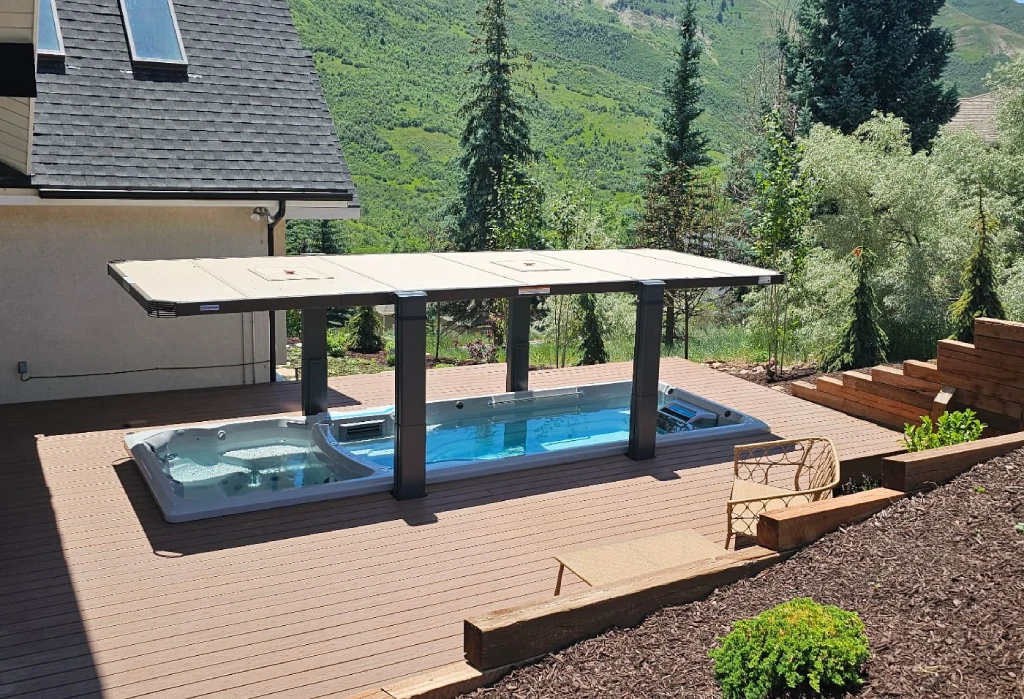
The cover might not be the most exciting part of your swim spa, but it’s one of the most important.
A quality cover keeps debris out, protects water quality, reduces evaporation, and dramatically improves energy efficiency. In many cases, a good cover can reduce heat loss by 50–70%.
That’s a major reason why modern swim spas are considered a low maintenance swim spa solution compared to traditional pools.
Cover Maintenance Checklist
- Rinse monthly to remove dirt and pollen
- Clean bird droppings promptly
- Apply UV protectant every 1–3 months
- Inspect for tears or damage
A heavy cover is usually a warning sign that water has entered the insulation core.
Bachmann carries a premium swim spa cover range designed specifically for Wisconsin’s climate, including heavy snow loads and freezing winter temperatures.
Draining and Refilling: The Full Reset
No matter how diligent your water care routine is, every swim spa eventually needs fresh water. Most owners should plan for a drain and refill annually.
You may need to do it sooner if:
- TDS levels are high
- Water remains cloudy after treatment
- Odors persist
- Multiple people use the spa daily
Drain and Refill Process
- Turn off the breakers.
- Drain the spa using a drain valve or submersible pump.
- Wipe down surfaces and waterlines.
- Inspect jets and fittings.
- Rinse thoroughly.
- Refill with fresh water.
- Test and balance water before use.
If your home uses well water, a hose pre-filter can help reduce calcium and mineral content before the water enters the spa.
FastLane and Current System Maintenance
For owners performing Endless Pool maintenance on a system equipped with FastLane®, a few extra checks should become part of your routine.
Inspect the FastLane® unit regularly for:
- Hair buildup
- Leaves
- Small debris
- Loose fittings
Reduced current strength is often caused by a partially blocked intake screen rather than a major mechanical issue.
You can learn more about the FastLane current system and compatible accessories through Bachmann.
Seasonal Maintenance: Wisconsin-Specific Tips
Wisconsin’s four-season climate creates unique maintenance considerations.
Spring Startup
Spring is the perfect time for a complete refresh.
- Drain and refill the water
- Inspect exterior panels
- Check jets and fittings
- Deep clean filters
- Examine the cover for winter damage
Summer Maintenance
Summer is usually the easiest maintenance swim spa season.
People use their swim spas more often, but maintenance becomes second nature once a routine is established.
During summer:
- Test water three times per week
- Rinse filters more frequently
- Keep the cover on when not in use
- Monitor sanitizer levels closely
Fall Preparation
Before temperatures drop:
- Rebalance water chemistry
- Deep clean filters
- Verify heater operation
- Inspect the cover
- Stock up on maintenance supplies
Discovering a heater issue in October is far better than discovering one in January.
Winter Operation
Most Bachmann customers in Madison, Brookfield, and throughout Wisconsin keep their swim spas running year-round.
Winter is when swim spa maintenance costs are typically highest because heating demand increases significantly.
To maximize efficiency:
- Keep the cover closed whenever possible
- Maintain proper water levels
- Monitor water temperature regularly
- Inspect the cover seal for gaps
Never drain a swim spa during freezing weather without following a complete winterization procedure.
For Wisconsin homeowners seeking year-round performance, Bachmann’s modular Endless Pools are designed specifically for cold-climate operation.
Swim Spa Maintenance Cost: What to Budget
Many prospective owners want to know the real swim spa maintenance cost before purchasing.
Typical Monthly Costs
- Chemicals: $30–$75
- Electricity: $50–$150
Typical monthly operating costs range from approximately $80–$225, depending on usage, Endless Pool model, water temperature, and season.
Typical Annual Costs
- Filter replacement: $50–$200
- Cover replacement (every 5–7 years): $500–$1,500
- Pump and current system servicing: Approximately $100–$300 per year
- Water replacement: Every 12–18 months (cost varies based on local water rates)
For most homeowners, total annual maintenance costs typically range from $1,200 to $2,000, depending on usage, climate, and the age of the system.
While these expenses are part of long-term ownership, modern swim spas are designed to be energy efficient and relatively easy to maintain.
Related – Endless Pool Cost Breakdown
Swim Spa Maintenance FAQs
How often should I change the water in my swim spa?
Once a year is the standard recommendation. Heavy use, multiple bathers, or recurring water-quality issues may require more frequent changes.
Is a swim spa hard to maintain?
No. Most owners spend about 15–20 minutes per week on routine care. Consistency is what makes swim spa maintenance simple.
How much does it cost to maintain a swim spa per month?
Most owners spend between $80 and $225 per month to run a swim spa, including electricity and water-care chemicals. Long-term maintenance costs, such as filter replacements and servicing, average an additional $100–$167 per month when spread across the year.
Simple, Consistent Maintenance Keeps Your Swim Spa at Its Best
The secret to successful swim spa maintenance isn’t complicated. Test your water regularly, clean your filters, protect your cover, and stay ahead of seasonal changes. Small, consistent efforts prevent most of the issues owners encounter and help protect your investment for years to come.
For Endless Pools owners throughout Madison, Brookfield, and the rest of Wisconsin, Bachmann Pools, Spas & Saunas is your trusted local resource for accessories, covers, water-care products, and expert support. If you ever have questions about maintenance, seasonal preparation, or equipment care, our team is here to help keep your swim spa performing at its best.