





Backyard pools are no longer just a luxury feature for large properties. Today, homeowners are looking for smarter ways to swim, relax, exercise, and enjoy their outdoor space without committing to the size, maintenance, or cost of a massive backyard project.
That’s where the debate around the Endless Pool vs traditional pool really starts. On one side, you have the classic in-ground pool built for entertaining and recreation. On the other side, you have compact Endless Pools and swim spas designed for fitness, hydrotherapy, and year-round use.
The right choice depends on your space, budget, lifestyle, and how you actually plan to use the pool. Here’s a side-by-side breakdown to help you decide which option makes the most sense for your home.
Quick Comparison: Endless Pool vs Traditional Pool
| Factor | Endless Pool | Traditional Pool |
| Avg. Cost | $25k–$50k | $25k–$120k+ |
| Footprint | ~14 × 9 ft | 12 × 40 ft+ |
| Install Time | 1–7 days | 2–3 weeks |
| Year-Round Use | Yes | Limited |
| Annual Maintenance | $500–$1,500 | $2,000–$3,000 |
| Water Volume | 1,500–3,000 gal | 5,000 gal |
| Lifespan | 15–20 yrs | 20–50 yrs |
What Is an Endless Pool?
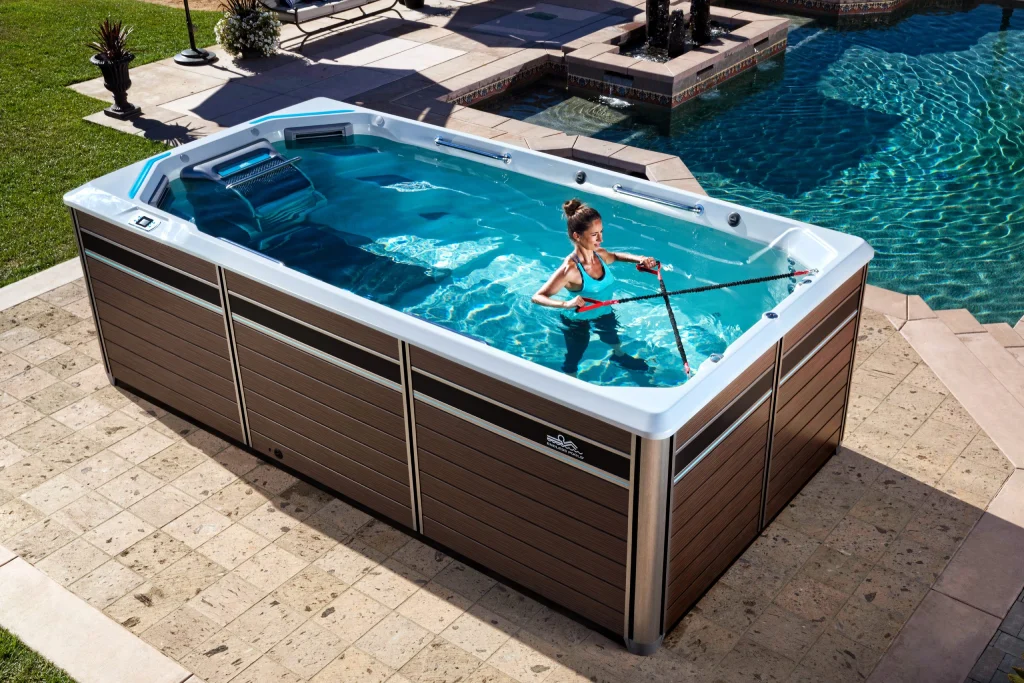
An Endless Pool is a compact swimming system that creates an adjustable current, allowing you to swim continuously in place instead of turning around at the end. Many homeowners also refer to them as an Endless Pool swim spa because they combine exercise, relaxation, and hydrotherapy in a space-saving design.
Unlike a traditional pool, an Endless Pool can often fit inside basements, garages, sunrooms, or smaller backyards. Standard dimensions are usually around 14 by 9 feet, though larger models are also available.
Most systems include:
- Adjustable swim current technology,
- Resistance training options,
- Built-in hydrotherapy jets,
- Heated water for year-round use,
- Optional underwater treadmills or rowing kits.
But can you convert a traditional pool into an Endless Pool? The answer is yes. Some homeowners even retrofit an existing pool with a Fastlane Swim current system.
What Is a Traditional Pool?
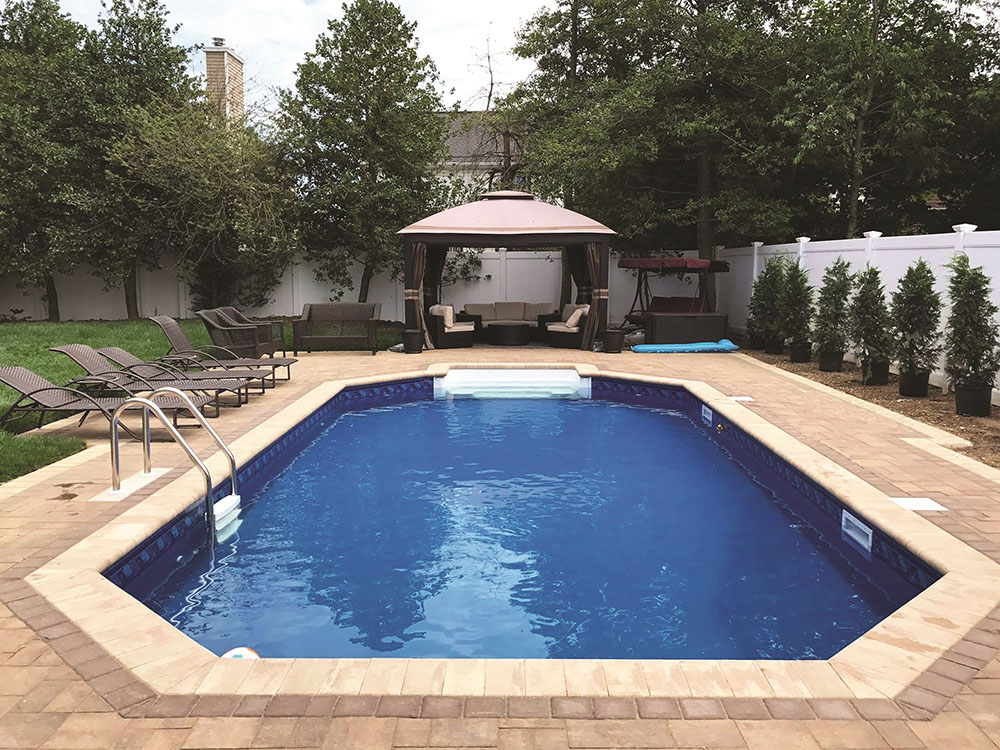
A traditional pool is the classic backyard swimming pool most homeowners picture, offering plenty of space for swimming, relaxation, recreation, and entertaining.
Traditional pools come in several styles, including:
- Gunite pools;
- Fiberglass pools;
- Vinyl liner pools;
- Above ground pools;
- Infinity edge pool designs;
- Large custom inground pool layouts.
These pools are available in a wide range of sizes and designs to suit different properties, lifestyles, and budgets. Many start around 24 feet in length and can extend beyond 40 feet for homeowners who want more swimming and gathering space.
As permanent outdoor features, traditional pools are typically installed as part of a broader backyard design and may involve site preparation, permitting, safety requirements, and a multi-stage construction process.
For homeowners who enjoy hosting, family activities, and having plenty of room to swim and unwind, a traditional pool can become the centerpiece of an outdoor living space for years to come.
Space, Installation, and Climate Fit
For many homeowners, space and climate become the deciding factors.
A traditional in-ground pool requires a fairly large yard with room for setbacks, decking, drainage, and landscaping. Depending on HOA rules or city regulations, swim spa installation may also require extensive approvals and site prep.

An Endless Pool offers much more flexibility. Because the system is compact and self-contained, it can often be installed indoors, including basements, garages, and sunrooms, or smaller urban backyards.
Installation is also dramatically faster. While a traditional pool can take two to three months to complete, many Endless Pools are operational within days.
That matters in colder regions like Wisconsin, where outdoor swimming seasons can feel short. Endless Pools are designed for year-round use, making them especially attractive for homeowners who want daily exercise regardless of the weather.
Swimming Experience and Fitness Benefits
This is where the biggest difference between the two becomes obvious.
An Endless Pool is built around controlled swimming resistance. It offers a similar experience to swimming in a lap pool meaning you get the same steady workout without constantly swimming back and forth to complete laps. With an Endless Pool, you swim continuously against an adjustable current. The experience feels surprisingly smooth and natural, similar to open-water swimming. But can you still swim laps in an Endless Pool? Absolutely, that’s exactly what they’re designed for.
That makes Endless Pools especially popular among triathletes, fitness swimmers, rehab patients, seniors, and anyone focused on healthy swimming and low-impact exercise.
The benefits of Endless Pool systems often include:
- Low-impact cardio,
- Resistance training,
- Hydrotherapy,
- Joint-friendly workouts,
- Adjustable intensity levels.
Traditional pools, however, provide a different kind of experience. A larger pool allows for open recreational swimming, diving, pool games, water volleyball, multiple swimmers at once, and family playtime.
If your goal is exercise and wellness, an Endless Pool may offer more functionality in less space. If your goal is entertainment and recreation, a traditional pool is usually a better fit.
Recreation, Family Use, and Lifestyle
Lifestyle matters just as much as square footage. One thing that both types of pools have in common is the variety of pool accessories available to personalize the space and make the pool fit your lifestyle.
Traditional pools naturally become social spaces. They’re ideal for hosting family gatherings, summer parties, and neighborhood cookouts. Larger pools also allow multiple people to swim comfortably at the same time.
An endless or spa pool is more personal and wellness-focused. Most units comfortably support one or two swimmers and often include built-in massage seats similar to a hot tub. Many homeowners appreciate the safer depth and easier access for children, seniors, or people recovering from injuries.
For homeowners prioritizing relaxation, therapy, or quiet exercise over entertaining, the smaller scale can actually feel more practical.
Maintenance and Operating Costs
One of the biggest reasons buyers compare Endless Pool vs traditional pool price ranges is long-term maintenance.
Traditional pools require ongoing cleaning, chemical balancing, seasonal opening and closing, filtration upkeep, and significantly more energy usage. In colder climates, winterizing alone can add hundreds of dollars per year. Average annual maintenance for a traditional pool can easily range between $3,000 and $6,000.
By comparison, the Endless Pool cost for maintenance is usually far lower. Because Endless Pools use much less water and often include insulated swimming pool covers and energy-efficient systems, operating expenses tend to stay manageable. Many owners spend only minutes per week on chemical balancing and basic upkeep.
Typical Endless Pool ownership includes:
- Lower heating expenses,
- Reduced water use,
- Less evaporation,
- Simpler cleaning,
- Smaller filtration systems.
If you’re asking yourself, “Is an Endless Pool worth it?” the answer usually comes down to how often you’ll use it. For homeowners focused on regular exercise and year-round wellness, the lower operating costs can make a huge difference over time.
An Endless Pool can also add value through its fitness and wellness appeal. Buyers interested in hydrotherapy, exercise, or year-round swimming often see them as premium upgrades, especially in smaller yards.
That value largely depends on local buyer demand, installation quality, and how well the system fits the overall home design.
Related Post – Swim Spa Maintenance
Which Pool Is Right for You?
Here’s a simple way to narrow it down:
- Fitness swimmer or triathlete → Endless pool
- Small lot or urban home → Endless pool
- Senior or rehab-focused buyer → Endless pool
- Large family that entertains often → Traditional pool
- Homeowner wanting a backyard centerpiece → Traditional pool
- Resale-focused buyer in a warmer climate → Traditional pool
Summary
When comparing an Endless Pool vs traditional pool, there’s no universal winner. The right choice depends on your budget, available space, climate, the right pool builders, and how you plan to use the pool.
If you want year-round fitness, lower maintenance, and compact installation flexibility, an Endless Pool or swim spa may be the better investment.
If your priority is recreation, entertaining, and creating a large outdoor gathering space, a traditional pool still delivers the classic backyard experience many homeowners love.
The smartest next step is seeing both options in person, asking questions about installation and upkeep, and finding the system that fits your lifestyle, not just your backyard.