





Owning a hot tub is one of the best ways to relax at home. But that relaxing soak depends on one thing most people underestimate: consistent hot tub maintenance.
Whether you own a hot tub, a jacuzzi-style spa, or even a swim spa, the fundamentals of care are the same. Keep the water clean, keep the system running efficiently, and your experience stays stress-free.
The good news? It doesn’t have to be complicated. With a simple routine and the right products, hot tub care becomes part of your weekly rhythm, not a chore.
Why Hot Tub Maintenance Matters
Hot tub maintenance isn’t just about keeping the water looking clear. It directly impacts your health, your equipment, and your long-term costs.
When water chemistry is neglected, bacteria and contaminants build up quickly. That leads to cloudy water, unpleasant odors, and potential skin or eye irritation. Following basic hot tub safety guidelines helps reduce these risks and keeps your spa safe for regular use. Over time, poor maintenance can also damage pumps, heaters, and internal components.
On the other hand, consistent care protects your investment. It extends the life of your spa, reduces the need for repairs, and keeps your hot tub safe and ready whenever you want to use it.
It’s also worth noting that maintenance can vary slightly depending on your system. Saltwater hot tub maintenance is often more automated, while traditional chlorine or bromine systems require more hands-on balancing. Either way, a solid routine makes all the difference.
If you’re still exploring your options, you can browse available hot tubs at Bachmann to see how different systems compare.
Hot Tub Maintenance Checklist at a Glance
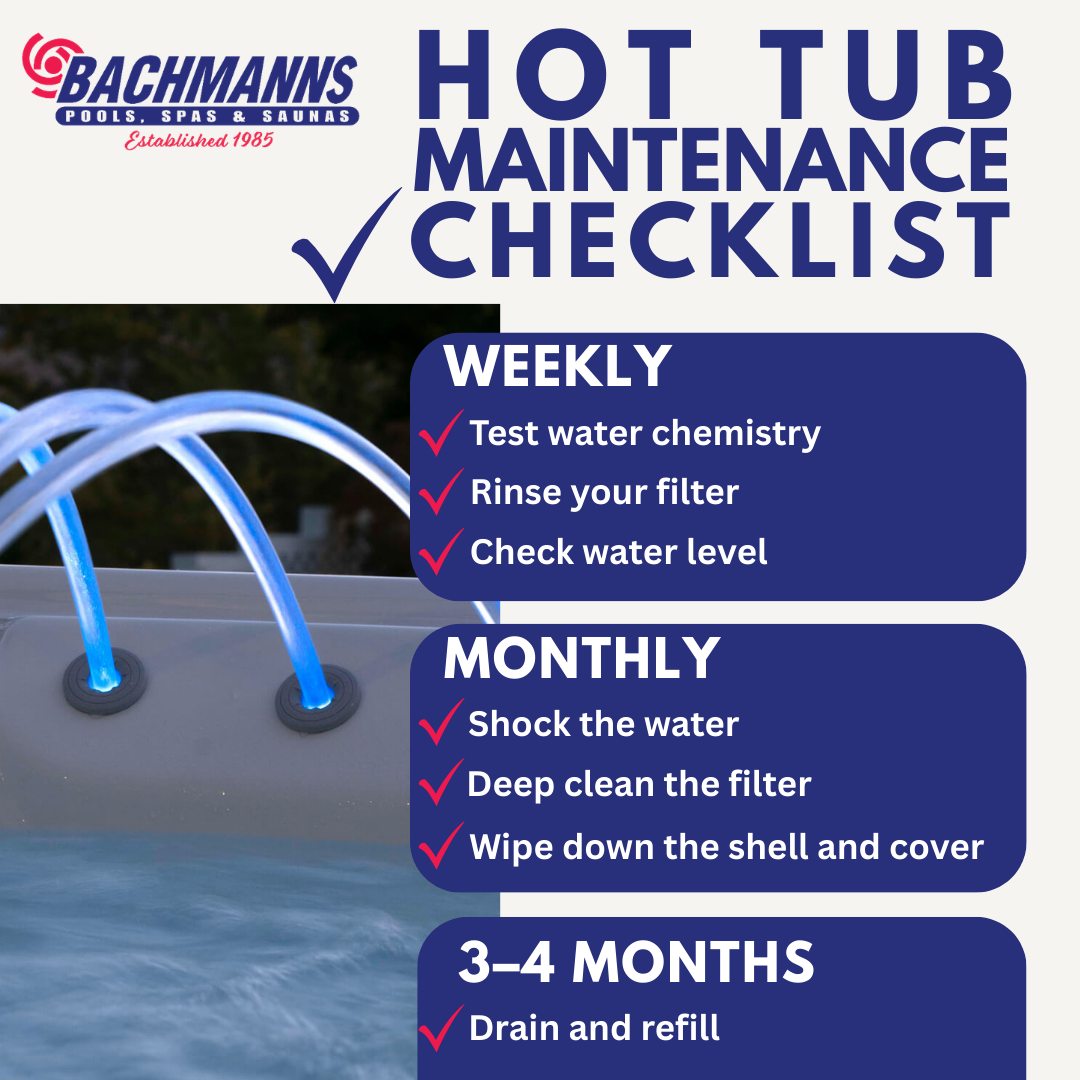
A simple checklist helps keep everything on track. Think of it as your spa maintenance schedule.
Weekly
- Test and balance water chemistry
- Check sanitizer levels
- Rinse the filter
Monthly
- Deep-clean the filter
- Inspect jets and cover
- Shock the water
Quarterly
- Drain, clean, and refill the tub
- Inspect the shell and equipment
Annually
- Schedule a full professional inspection and service
Following this maintenance routine ensures your spa stays clean, efficient, and ready to use year-round.
Weekly Hot Tub Maintenance — The Non-Negotiables
Weekly hot tub maintenance is where most of the work happens, but it’s also where you prevent the biggest problems.
Start by testing your water two to three times per week. You’re aiming for a pH between 7.2 and 7.8 and alkalinity between 80–120 ppm. Keeping these levels balanced prevents irritation and protects your equipment.
Next, check your sanitizer. Chlorine and bromine are the most common options. They keep bacteria under control and maintain water clarity. If you’re looking for a lower-maintenance option, saltwater systems can reduce how often you need to adjust chemicals manually.
A quick filter rinse is another easy win. It takes just a few minutes but helps maintain strong water flow and keeps debris from building up.
Finally, check your cover. A damaged or waterlogged cover reduces insulation and increases energy costs. Catching small issues early helps avoid bigger problems later.
These simple steps form the foundation of easy hot tub maintenance and keep your water in great condition.
Hot Tub Maintenance Chemicals — What You Actually Need
Hot tub maintenance chemicals don’t have to be overwhelming. In fact, most owners only need a few essentials.
A sanitizer like chlorine or bromine is your first priority. This keeps the water safe by eliminating bacteria.
pH increasers and decreasers help maintain balance. If your pH drifts too high or too low, the water can become uncomfortable and less effective at holding sanitizer.
Alkalinity increaser acts as a buffer, preventing sudden swings in pH.
Shock treatments are also important. These break down organic contaminants like sweat, oils, and lotions. It’s a good idea to shock your tub after heavy use or once a month as part of your routine.
Clarifiers can help if your water looks cloudy, but they should be used sparingly.
You can find all the essentials for water care in one place, making it easier to stick to a simple system without overcomplicating things.
Monthly and Quarterly Hot Tub Care
Beyond weekly tasks, your hot tub needs a deeper level of care on a regular basis.
Once a month, take time to deep-clean your filter. This involves soaking it in a dedicated cleaning solution to remove oils and buildup that a simple rinse won’t catch.
Monthly shock treatments also help keep water fresh and prevent buildup.
Every three to four months, it’s time to drain and refill your hot tub. Over time, total dissolved solids build up in the water, making it harder to balance. Starting fresh keeps everything running smoothly.
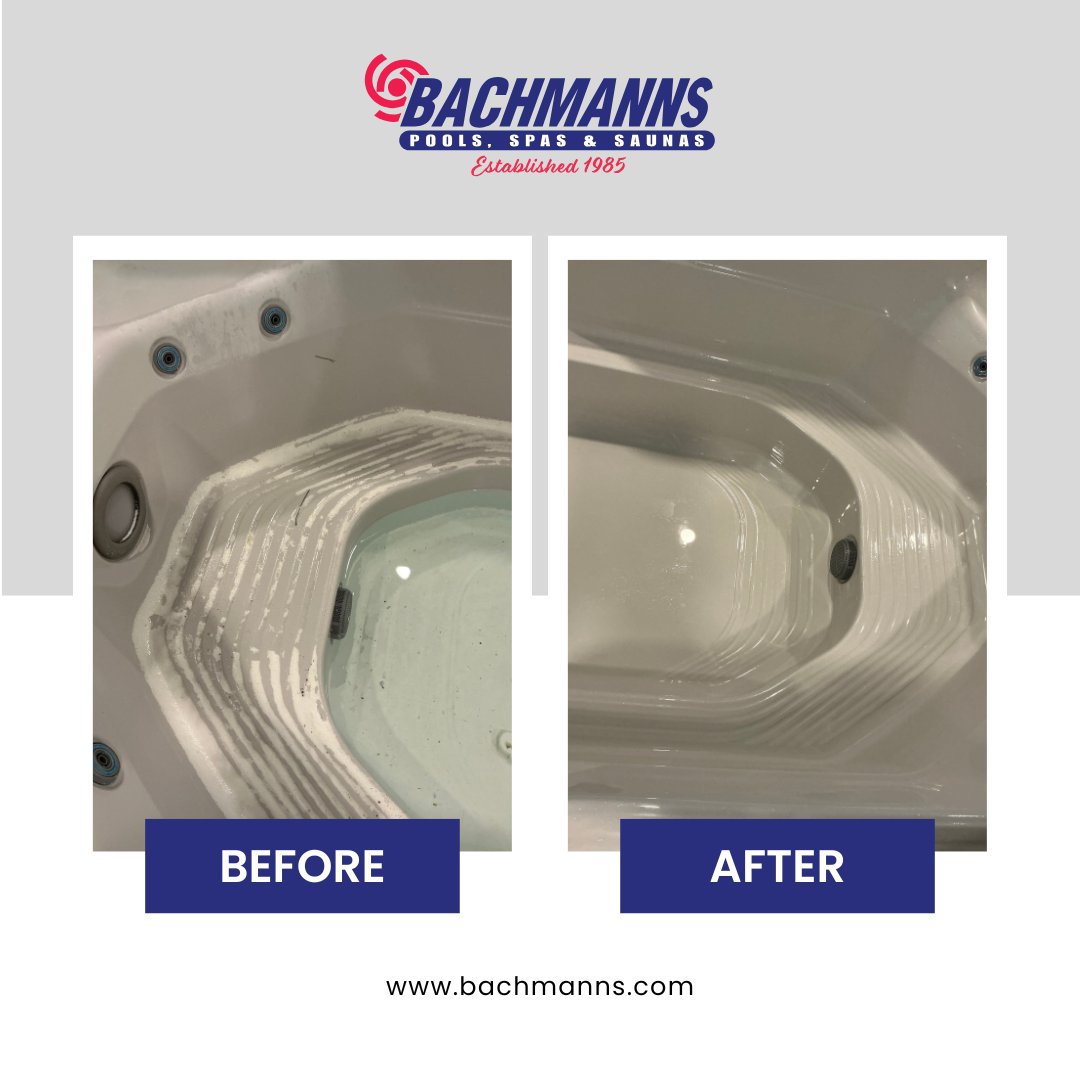
While the tub is empty, inspect the shell for any stains or damage. Use only spa-safe cleaners to avoid harming the surface.
This part of your hot tub maintenance guide ensures your spa stays in peak condition long-term.
Related Post – Hot Tub Prices Guide
Hot Tub Winter Maintenance in Wisconsin
If you live in Wisconsin, winter changes everything.
The best option for most homeowners is to keep the hot tub running year-round. Maintaining a steady water temperature around 100–102°F helps prevent freezing and keeps the system functioning properly.
You’ll want to check water levels regularly and ensure your cover is in good condition to retain heat.
The alternative is full winterization. This involves draining the tub, blowing out all water lines, adding antifreeze, and sealing the system. It’s more involved and should be done carefully to avoid damage.
In a climate like Madison or Brookfield, cutting corners with winter prep can lead to frozen pipes and expensive repairs. If you’re unsure, a professional hot tub maintenance service is worth considering.
Swim Spa Maintenance — Key Differences
Swim spas follow many of the same principles as hot tubs, but there are a few key differences.
Because they hold more water, it takes longer for chemicals to balance. Adjustments need to be made gradually.
Filters also work harder due to increased usage, so they require more frequent cleaning.
Aside from that, the same core routine applies. Test your water regularly, shock when needed, and plan for periodic draining and refilling.
When to Call a Professional
Even with the best maintenance routine, there are times when expert help makes sense.
If your water stays cloudy despite balancing chemicals, it could point to a deeper issue. Unusual noises from the pump or heater are another warning sign.
Low jet pressure or inconsistent heating can also indicate problems that require inspection.
Scheduling an annual service check is a smart move, even if everything seems fine. It helps catch small issues before they turn into expensive repairs.
Summary
Hot tub maintenance doesn’t have to be complicated. With a consistent routine and the right products, you can keep your spa clean, safe, and running efficiently for years.
Considering there are over 7.3 million hot tubs in the U.S., and owners keep them for an average of 7.5 years, taking care of your system is key to getting the most out of that investment.
Whether you’re just getting started or looking to simplify your current routine, focusing on the basics makes all the difference. Clean water, balanced chemistry, and regular upkeep ensure every soak is as relaxing as it should be.
If you ever need guidance, products, or expert support, Bachmann is always a reliable place to start.